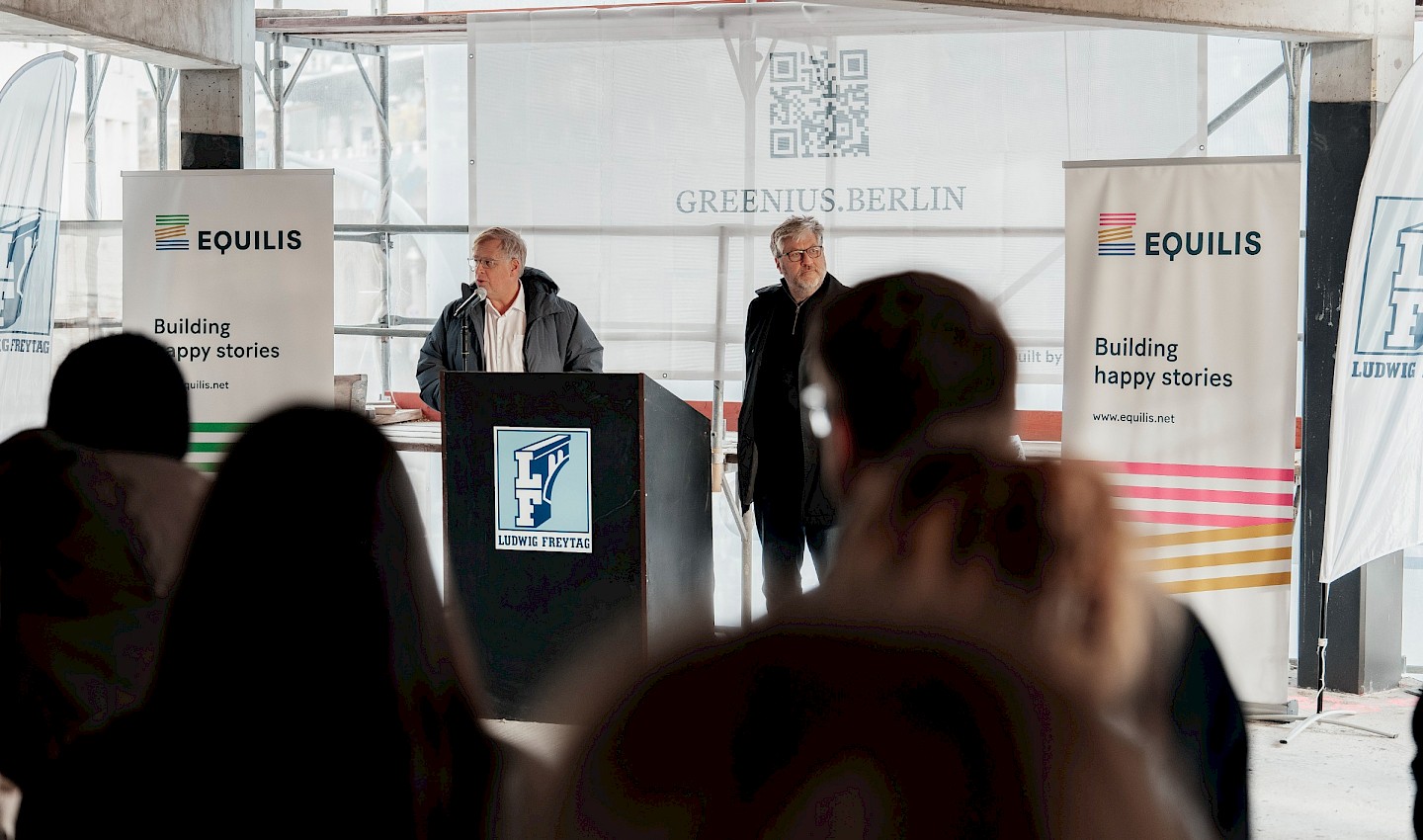
Topping-out ceremony for an office building with character – GREENIUS in Berlin-Wedding celebrates a milestone
Topping-out ceremony for an office building with character – GREENIUS in Berlin-Wedding celebrates a milestone
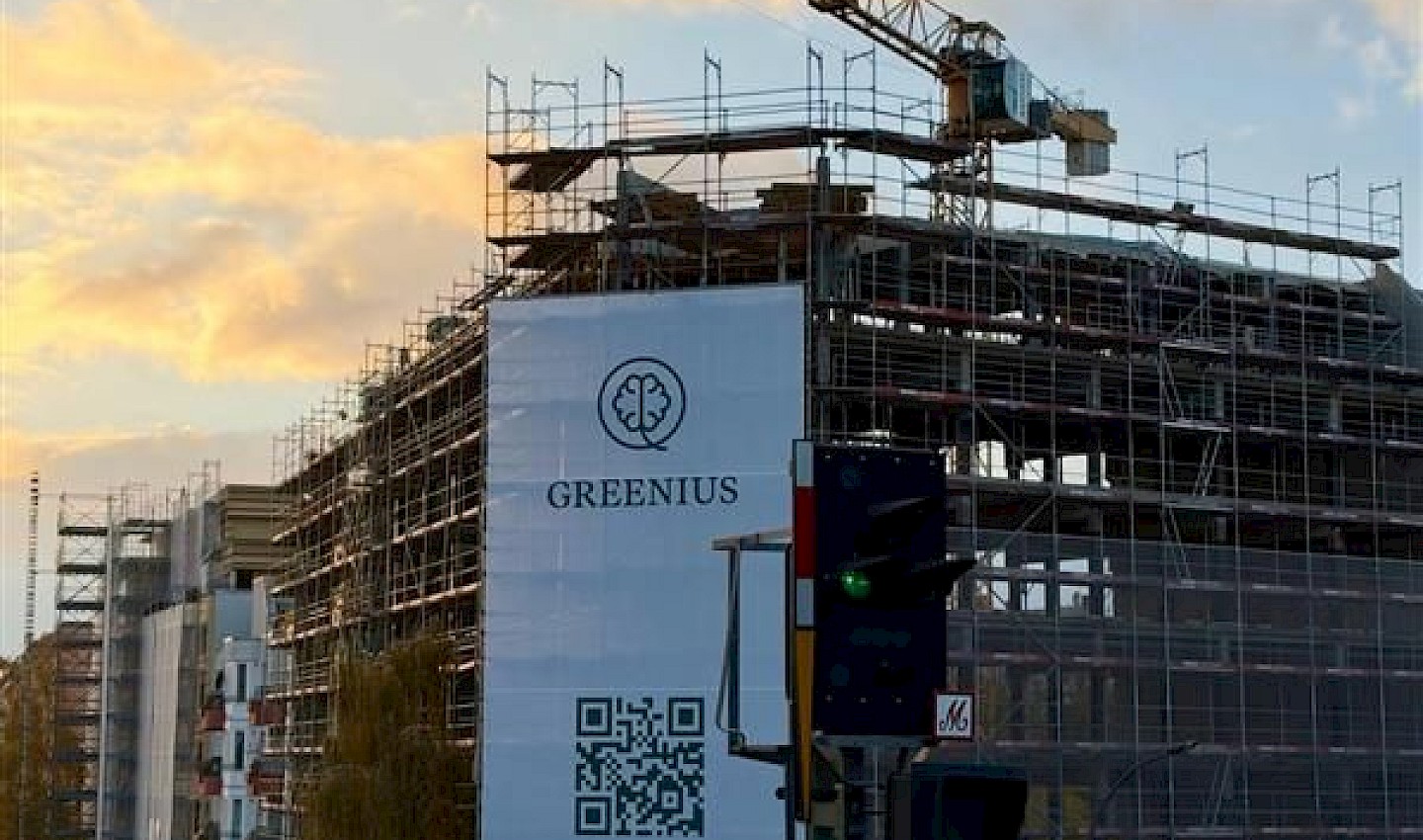
- Structural shell of the seven-storey corner building at Wedding S-Bahn and U-Bahn station completed
- Around 3,800 square metres of flexible office space: 15 units ranging from 110 to 320 square metres that can be combined, also catering for smaller businesses
- Highest quality standards: QNG-Plus and DGNB Platinum certification targeted; mobility concept awarded Good Mobility Gold pre-certification
- Completion scheduled for September 2027
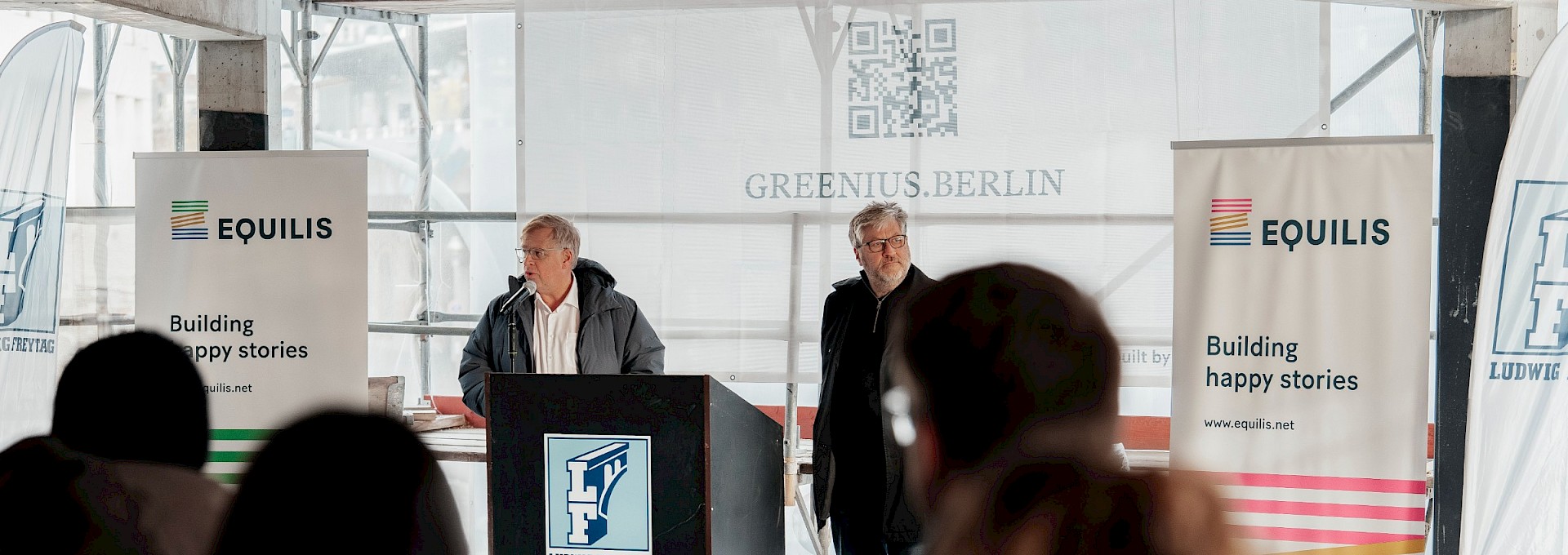
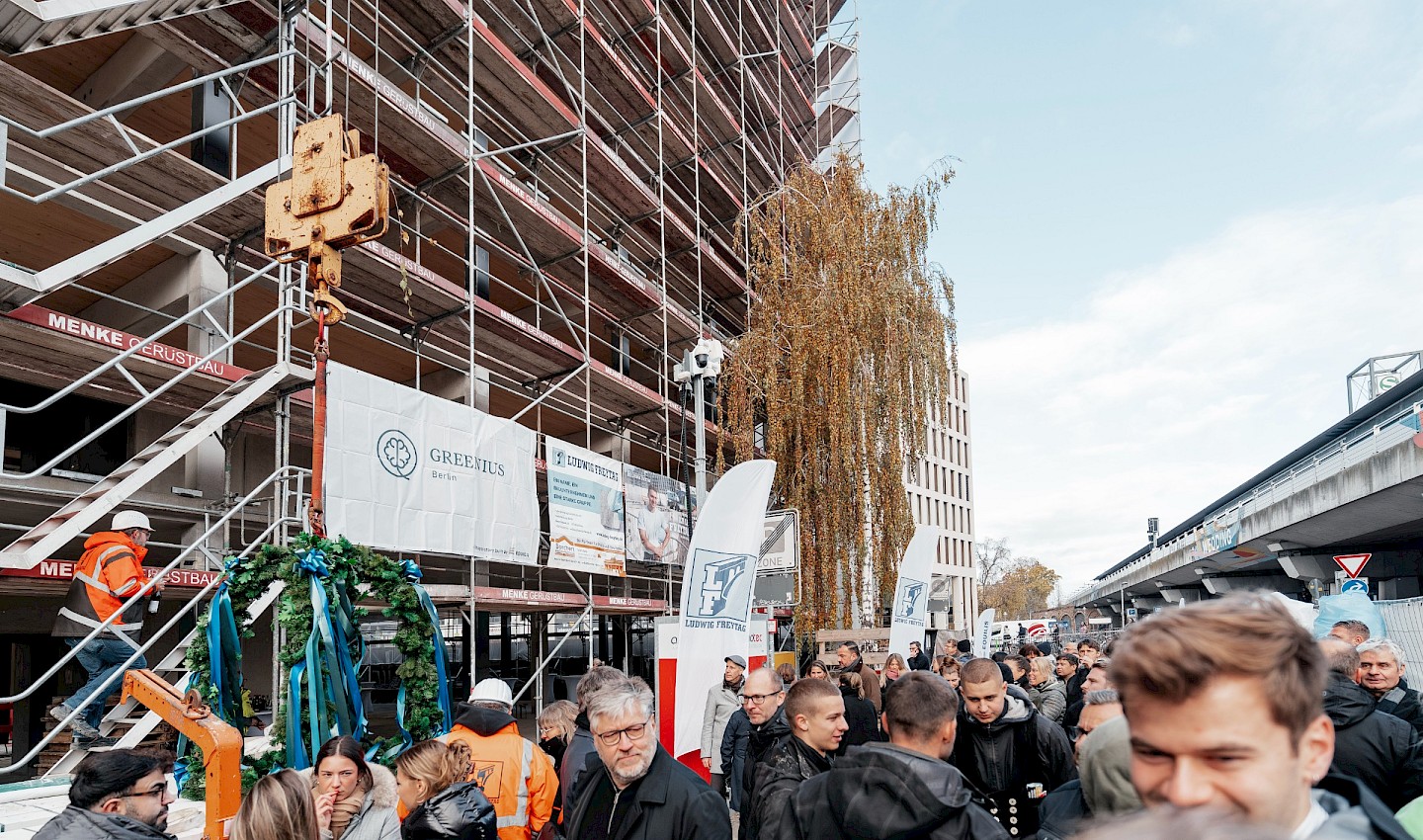
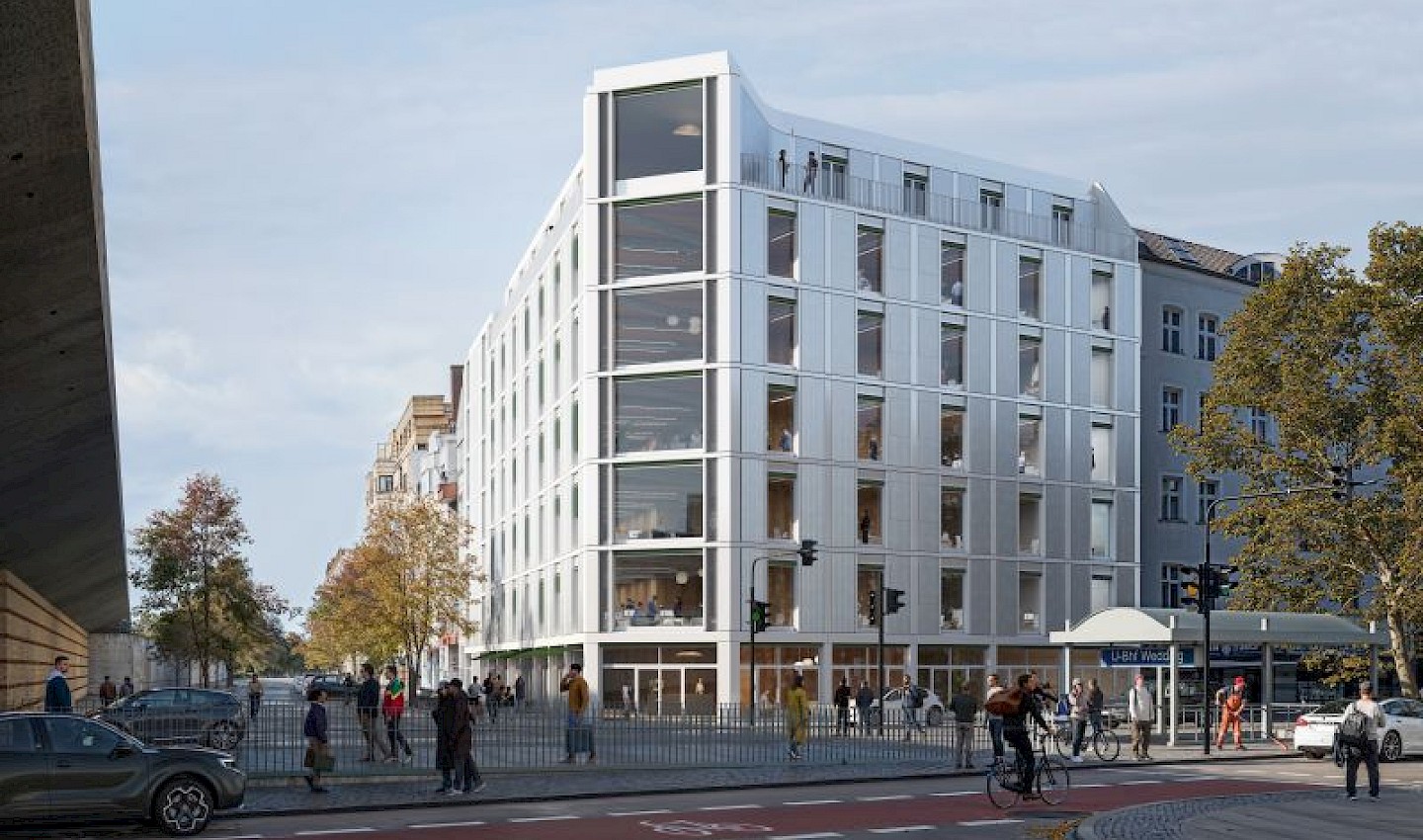
GREENIUS, the office development by European property developer Equilis, is celebrating the completion of its structural shell with a topping-out ceremony. Around 3,800 square metres of office and commercial space are taking shape on a prominent corner site at Wedding S-Bahn and U-Bahn station. The 18 units, ranging from 110 to 320 square metres, can be flexibly adapted. If required, the ground and first floors can be connected across levels. The vibrant Sprengelkiez neighbourhood offers an urban setting with cafés, shops, cultural venues and recreational spaces right on the doorstep. Commercial units on the ground floor and an adjoining residential building with 12 apartments complete the ensemble. Completion is scheduled for September 2027.
Hybrid timber construction with an exposed structure
The design by architectural practice E2A emphasises the honest, exposed use of materials. The floor slabs are made of timber, while the load-bearing columns and beams, stairwell cores and basement are constructed in reinforced concrete. With the structural shell complete, the interplay between the two materials can now be seen across the full height of the building for the first time.
The combination of sanded, exposed cross-laminated timber floor slabs and exposed concrete walls gives the offices a distinctive character, bringing together the warmth of timber and the clarity of concrete. The layouts provide space for focused work, quiet retreat and interaction alike. Terraces with views across Berlin and a landscaped courtyard also offer opportunities for tenants to meet and exchange ideas.
A mobility concept without car parking spaces
Equilis has deliberately chosen to forgo an underground car park and car parking spaces, instead championing environmentally friendly mobility that promotes health. A bicycle garage with up to 175 spaces, a service point with e-bike charging stations and shower facilities make cycling a natural choice for commuting. Wedding S-Bahn and U-Bahn station, with connections to the Ringbahn, the S15 and the U6, is just a few steps away. The Good Mobility Council has already awarded the mobility concept Gold pre-certification.
Hans-Peter Hähnlein, CEO of Equilis Germany: “With GREENIUS, we are taking a forward-looking approach to the changing office market: companies today often need less space, but expect even higher quality. GREENIUS combines small, flexible rental units with the highest standards, from its excellent location and hybrid timber construction to the targeted QNG-Plus certification. With the topping-out ceremony, we are celebrating an important milestone and thanking everyone whose dedication is driving this ambitious project forward.”
A pioneer in QNG-Plus certification for office buildings
GREENIUS aims to be one of the first office buildings in Germany to achieve the Quality Seal for Sustainable Buildings (QNG) at PLUS level. The criteria for this government-backed seal are set by the Federal Ministry for Housing, Urban Development and Building. It is based on DGNB certification, for which Platinum pre-certification has already been awarded. In addition, the building must meet minimum standards in areas such as life-cycle greenhouse gas emissions, certified timber, low-pollutant building materials and accessibility.
Solar power from the roof and façades, and rooftop rainwater retention
A carefully considered energy concept forms the basis for this. Photovoltaic panels are integrated into the street-facing façades, with additional PV elements on the roof. The electricity generated is fed directly into the building and also benefits its occupants through a tenant electricity scheme. Air-to-water heat pumps supply heating and cooling, with ceiling-mounted heating and cooling panels regulating temperatures in the offices. Decentralised ventilation units with heat recovery of almost 90 per cent complement the concept. GREENIUS thus achieves the Efficiency Building 40 energy standard under Germany’s Federal Funding for Efficient Buildings (BEG) programme.
The roof also plays a role in climate adaptation: its extensive green roof retains rainwater to irrigate the rooftop vegetation. Evaporation from the plants and substrate helps cool the roof. In this way, GREENIUS contributes to the sponge city approach.
Further information is available on the GREENIUS project website: https://greenius.berlin
More news
Topping-out ceremony for an office building with character – GREENIUS in Berlin-Wedding celebrates a milestone
From M Park retail parks to shopping centres: M Core, expands its portfolio in Poland with the acquisition of Galeria Chełm from Equilis and Acteeum.